


Federal Minister of Agriculture, Food and Regional Identity of Germany opens CCEURO34
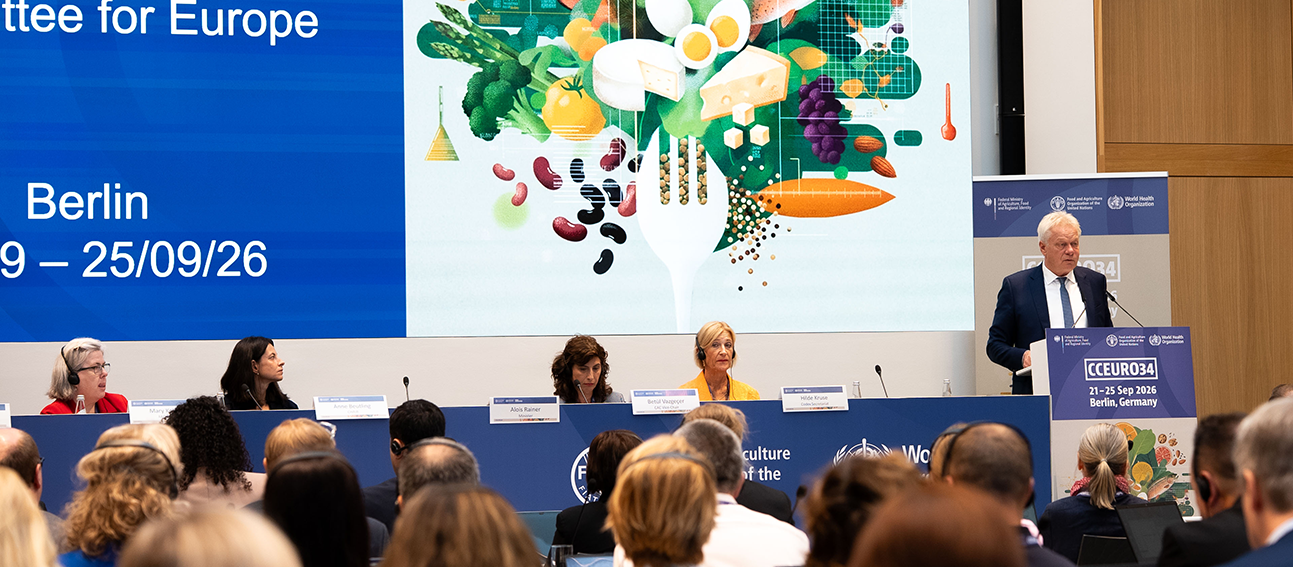
The 34th Session of the FAO/WHO Coordinating Committee for Europe (CCEURO34) has opened. Alois Rainer, Federal Minister of Agriculture, Food and Regional Identity of Germany, welcomed the delegates in Berlin. Referencing the latest WHO statistics on the burden of foodborne disease on health and economies, the Minister highlighted the need for food safety to achieve food security, wellbeing and decent living. Focusing on consumers and the CCEURO working group on dietary guidelines, the Minister pointed out that the development and implementations of such guidelines was not a purely academic exercise but can have concrete positive impacts on the life and well-being of many population groups, in particular vulnerable ones. Stressing the role of Codex in agrifood systems, the Minister said that “Codex Alimentarius has been demonstrating the practical value of multilateral cooperation for more than six decades,” and urged active engagement of the region through technical expertise, concrete data, and participation in working groups: “An international standard is only as strong as Members' willingness to develop and apply it together.”
Codex Alimentarius Commission Vice-Chairperson, Betül Vazgeçer, also highlighted the value of multiple viewpoints, stressing that this and active participation are Codex “strengths”. She reminded delegates that their work is carried out within “the broader framework of the Codex Strategic Plan which only becomes meaningful when it is translated into action.” She also invited delegates to attend the 50th meeting of the Codex Alimentarius Commission in national dresses to “remind us that, despite our different languages, traditions and cuisines, we come together around a common purpose and a shared responsibility.”
On behalf of the Codex Secretariat, Hilde Kruse highlighted the collaborative nature of work in Codex and CCEURO, the diversity of cultures and food systems, and the “common commitment to science-based standards, transparency and collaboration.” Finally, FAO, represented by Mary Kenny, and WHO, represented by Peter Hoejskov, gave highlights of their work to strengthen official food control systems, use of Codex standards and work on dietary guidelines in the region, particularly in countries with transition economies.
Anne Beutling, Chairperson of the Session, emphasized that from the perspective of Germany as Coordinator, the region was rooted in tradition while being a motor of innovation in Codex. “For the session, she encouraged to “look closely at how we work, ask questions, and openly share the challenges, experiences and lessons learnt in regards to food safety, quality and nutrition.”
This will be Germany’s last Session as Coordinator for the region, and this week’s agenda includes the nomination of a new coordinator for Europe.
Read more
Related content
A committee of shared purpose: Sally Hoffer on the evolution of CCCF
Dr Sally Hoffer has chaired the Codex Committee on Contaminants in Food since 2021. CCCF19 will be her last as Chairperson, as she hands over to her successor, Dr Susanne Sutterlin. We spoke with Dr Hoffer...
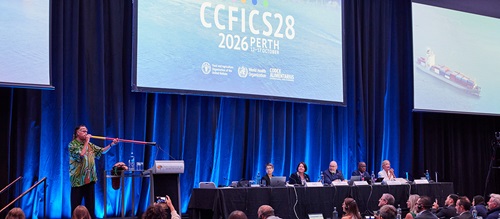
Interconnectedness is a key factor in inspection and certification work, as Committee meets for 28th Session
The 28th Session of the Codex Committee on Food Import and Export Inspection and Certification Systems (CCFICS) opened in a hybrid format in Perth, Australia, on 12 October, with opening remarks from the...
Have you met the Fishmonger?
Codex standards are science-based and developed with input from Codex Members and Observers who bring their experience and expertise to the standard development process. Implementation of Codex standards...
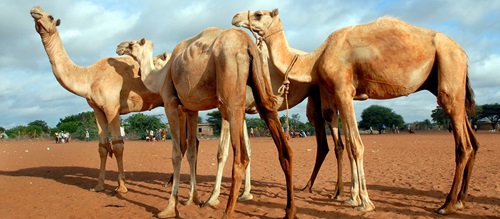
Discussions by correspondence on the proposed standard for pasteurized camel milk get under way
The newly reactivated Codex Committee on Milk and Milk Products (CCMMP) has started its 11th session, with a single agenda item, with the aim of developing a standard for pasteurized liquid camel milk....
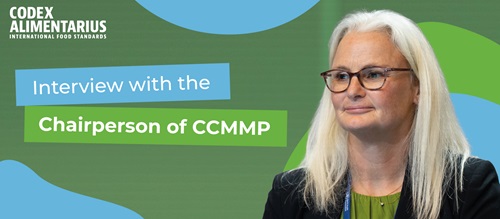
Meet the Chairperson of the Codex Committee on Milk and Milk Products
The Codex Committee on Milk and Milk Products (CCMMP) will work by correspondence 29 September–29 October 2026 to discuss the proposed draft standard for pasteurized liquid camel milk. In anticipation...
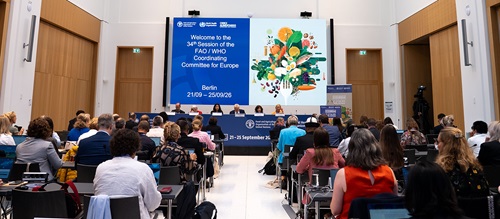
Risk communication, nutrition and food safety shape discussions at CCEURO34
The 34th Session of the FAO/WHO Coordinating Committee for Europe (CCEURO) has concluded in Berlin after a week of intensive discussion on topics relevant to food safety and Codex work in the region. Germany’s...
-jpg.tmb-thb5x4.jpeg?Culture=en&sfvrsn=4d06e677_5)
International standards can help turn the One Health principle into actions
At FAO’s Global Conference for Actions on One Health in Agrifood Systems, which is taking place in Rome, Italy 21–23 September 2026, included a session, Tuesday, on the role of international standards...
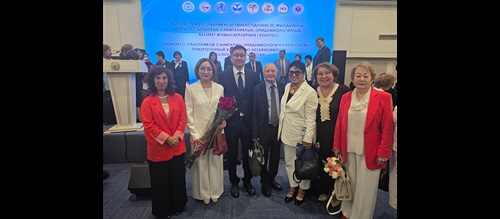
The first Congress of the Sanitary-Epidemiological Service took place in Kazakhstan
On 15 September 2026, the 1st Congress of Sanitary-Epidemiological Service Workers of the Republic of Kazakhstan took place in Almaty, and was dedicated to their professional holiday and the 35th anniversary...
-jpg.tmb-thb5x4.jpeg?Culture=en&sfvrsn=6fd562_5)
57th committee meeting scrutinizes pesticides for residue safety and receives updates on database modernization
The 57th Session of the Codex Committee on Pesticide Residues concluded in Beijing, China. During the one-week session, CCPR considered several compounds evaluated at the 2025 JMPR Meeting and advanced...