


The first Congress of the Sanitary-Epidemiological Service took place in Kazakhstan
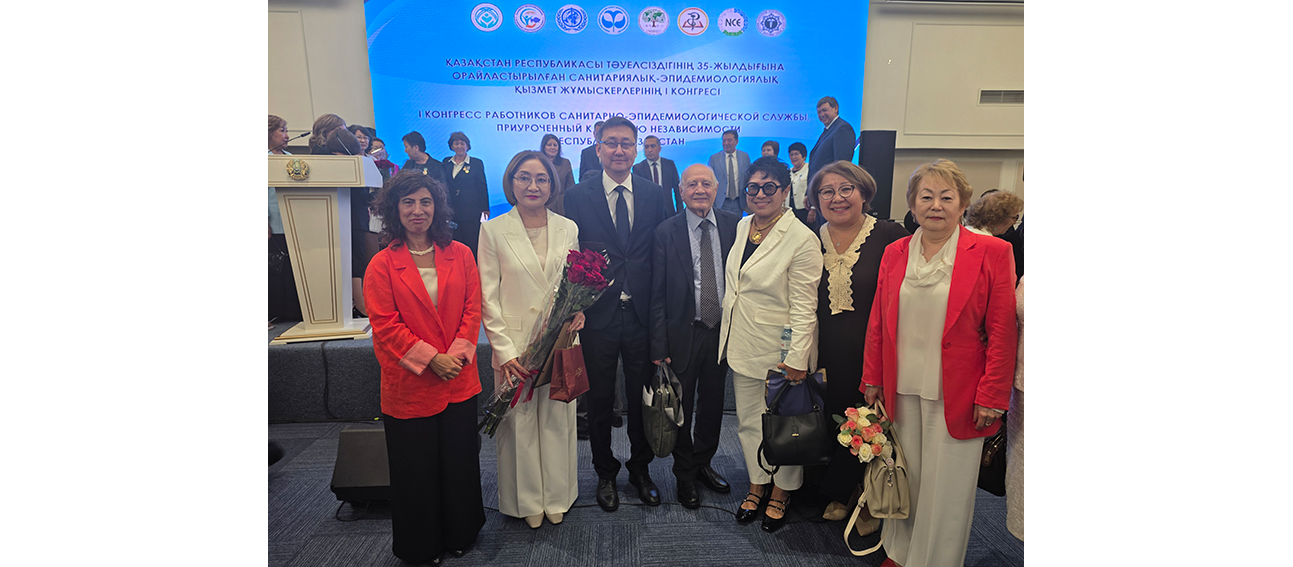
On 15 September 2026, the 1st Congress of Sanitary-Epidemiological Service Workers of the Republic of Kazakhstan took place in Almaty, and was dedicated to their professional holiday and the 35th anniversary of the country's independence.
The congress brought together more than 700 participants, including top officials and specialists from the sanitary-epidemiological service across all regions of Kazakhstan, industry veterans, representatives of government agencies, medical universities, research institutes, and international organizations, as well as experts from abroad.
Opening the Congress, Timur Sultangaziev, First Vice Minister of Healthcare of the Republic of Kazakhstan, noted the significance of this inaugural event and emphasized the special responsibility borne by specialists in the sanitary-epidemiological service: "Gathered here today are people for whom protecting public health is not merely a profession, but a daily responsibility demanding a high level of competence, integrity, and dedication to their work."
Sarkhat Beisenova, Chief State Sanitary Doctor of the Republic of Kazakhstan, emphasized that the inaugural congress served as a platform for pooling professional expertise and discussing the service's current challenges. "Today, the history, experience, and future of our service converge here. That is precisely the unique value of our Congress. We can exchange experiences, openly discuss issues, listen to one another, and collectively shape the future of our service" – she noted.
"Today, the sanitary-epidemiological service faces new challenges that cannot be addressed without scientific cooperation, modern technologies, and the exchange of international experience. Holding this inaugural Congress offers an opportunity to unite the professional community, discuss pressing challenges, and identify promising directions for the service's future development," noted Yerlan Kiyasov, Chairman of the Board of the National Center of Expertise.
Dr Betül Vazgicher, Vice-Chairperson of the Codex Alimentarius Commission in her greeting speech to the Congress, emphasized the importance of international standards in strengthening food safety, improving consumer health, and protecting the interests of national food producers. Dr Vazgicher noted Kazakhstan’s significant contribution—in its capacity as Regional Coordinator for Europe (2017–2022)—to revitalizing the participation of the region's Russian-speaking countries in Codex work.
As part of the Congress programme, international experts shared their experience in laboratory diagnostics and microbiology, and discussed issues regarding laboratory quality management, proficiency testing, and personnel training.
The Congress took on special significance due to its historic agenda. This year marks the 110th anniversary of the birth of the distinguished scientist Professor Masgut Aikimbayev—who made a significant contribution to the development of national science and the system for combating highly dangerous infections—as well as the 105th anniversary of the establishment of sanitary-bacteriological laboratories in Kazakhstan.
Skender Syla, Head of the WHO Country Office, and international guests, highlighted the importance of the sanitary-epidemiological service within the public health system and the need to further strengthen cooperation regarding the prevention of infectious diseases, epidemiological surveillance, and response to modern threats.
During the plenary session, reports on the development of the sanitary-epidemiological service were presented, and a ceremony was held to honor industry veterans and award specialists who have made significant contributions to its development.
Dr Betül Vazgicher was awarded the jubilee medal of the National Center of Expertise for her significant contribution to international cooperation and strengthening food safety.
Proceedings continued in three thematic sessions dedicated to modern challenges and prospects for ensuring the sanitary and epidemiological well-being of the population, the 105th anniversary of the establishment of sanitary-bacteriological laboratories, and the scientific legacy of Professor M. Aikimbayev.
The participants discussed the development of laboratory infrastructure, digitalization, the improvement of epidemiological monitoring, scientific cooperation, workforce capacity, and issues of food and biological safety.
Particular attention was paid to the "One Health" approach, which entails a comprehensive approach to preventing diseases in humans, animals, and plants, taking into account environmental and climatic factors.
There were special thanks to the volunteers for their contribution to the work of the congress.
The Congress concluded with the adoption of a resolution outlining the key directions for the further development and capacity strengthening of the sanitary-epidemiological service of the Republic of Kazakhstan.
Read more
Related content
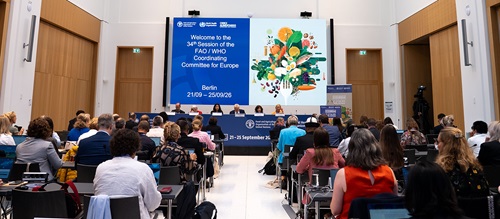
Risk communication, nutrition and food safety shape discussions at CCEURO34
The 34th Session of the FAO/WHO Coordinating Committee for Europe (CCEURO) has concluded in Berlin after a week of intensive discussion on topics relevant to food safety and Codex work in the region. Germany’s...
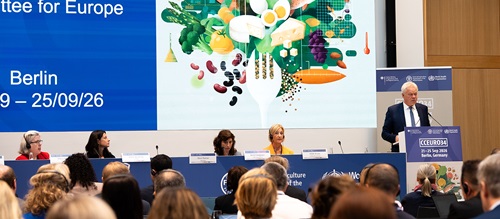
Federal Minister of Agriculture, Food and Regional Identity of Germany opens CCEURO34
The 34th Session of the FAO/WHO Coordinating Committee for Europe (CCEURO34) has opened. Alois Rainer, Federal Minister of Agriculture, Food and Regional Identity of Germany, welcomed the delegates in...
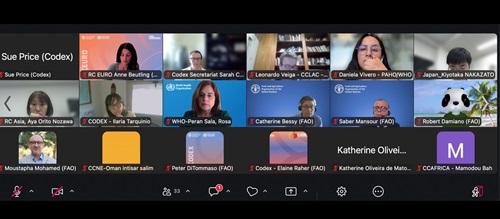
Codex coordinators prepare for new regional meeting cycle, stress stronger coordination and capacity building
The Codex coordinators met with representatives of the Codex Secretariat, FAO and WHO, to prepare for a new cycle of FAO/WHO coordinating committee meetings, with six regional sessions scheduled between...
.tmb-thb5x4.jpeg?Culture=en&sfvrsn=b11362b7_1)
Republic of Korea hosts APFRAS 2026 to strengthen regional cooperation on food safety
Seoul, Republic of Korea The Ministry of Food and Drug Safety (MFDS) of the Republic of Korea hosted the fourth Asia-Pacific Food Regulatory Authority Summit (APFRAS 2026) in Seoul, Republic of Korea,...
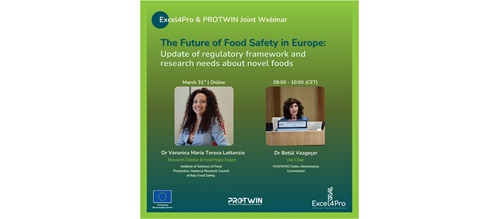
Exploring the future of food safety: novel foods and emerging production systems in focus
A recent webinar titled “The Future of Food Safety in Europe: Update of the Regulatory Framework and Research Needs on Novel Foods” brought together international experts to discuss the rapidly evolving...

Learning from experience and procedures: New EU delegates build confidence for future Codex work
by the European Union Codex Contact Point From 13 to 15 January 2026, the European Union (EU) hosted a Better Training for Safer Food (BTSF) workshop entitled Supporting Effective Participation in Codex...
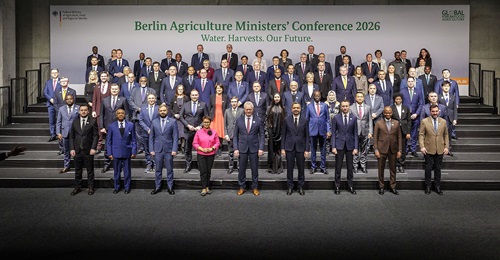
Agriculture ministers spotlight Codex water reuse guidance at GFFA
By Anne Beutling, CCUERO Coordinator At the Global Forum for Food and Agriculture (GFFA), held in Berlin from 14 to 17 January 2026 at the beginning of Green Week, agriculture ministers from 59 countries...
Germany to host the International Training for Safer Food 2026
For the 7th time, the German Federal Office of Consumer Protection and Food Safety (BVL), will host the International Training for Safer Food (ITS Food). ITS Food is a training series on food safety risk...
.tmb-thb5x4.jpeg?Culture=en&sfvrsn=544d6908_1)
CTF / Seminar on harmonizing Uzbekistan’s food safety legislation with international standards
On 18–19 September 2025, a seminar was held in Tashkent on the topic: “The importance of harmonizing the Republic of Uzbekistan’s food safety legislation with international standards for protecting human...