


Meet the Chairperson of the Codex Committee on Milk and Milk Products
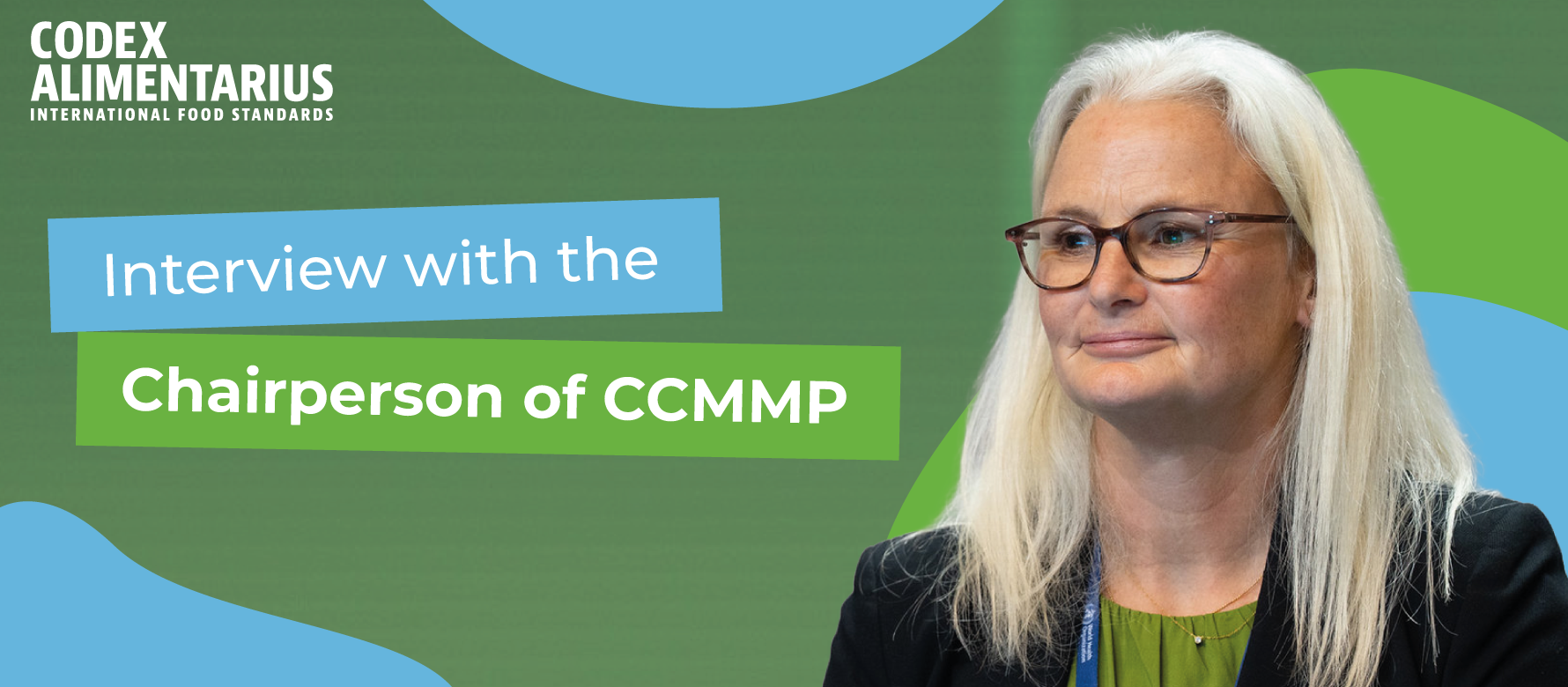
The Codex Committee on Milk and Milk Products (CCMMP) will work by correspondence 29 September–29 October 2026 to discuss the proposed draft standard for pasteurized liquid camel milk. In anticipation of that meeting, we spoke with the new Chairperson of that committee, Jenny Bishop, to ask her a bit about herself and her expectations for this new work.
Jenny thanks for your time. As this is your first session as Chairperson of the Codex Committee on Milk and Milk Products (CCMMP), could you briefly introduce yourself and tell us about your involvement in the work of Codex?
Thank you. I am the Director of Food Risk Management at New Zealand Food Safety (NZFS). Our Directorate protects public health, maintains confidence in the safety and suitability of food through identification, assessment and management of potential food safety risks. The Directorate includes emerging risk, food compliance services, regulatory standard setting and readiness and response functions. I have been involved in various parts of the food safety system for 25 years, including health protection, compliance, enforcement, standard development and food safety response management with positions held at international, national, regional and local levels. Prior to joining NZFS, I worked for the World Health Organization assisting countries in the development of national food control systems and coordinating the management of international food safety concerns, and was posted in Geneva in Switzerland, Manila in the Philippines and Suva in Fiji.
Throughout my career I have participated in several Codex committees, including the Codex Committee on Food Hygiene (CCFH), the Codex Committee on General Principles (CCGP), the FAO/WHO Coordinating Committee for Asia (CCASIA), and the FAO/WHO Coordinating Committee for North America and the South West Pacific (CCNASWP), and I currently attend the Codex Alimentarius Commission.
For this session, I am pleased to be supported by Jenny Reid, who will serve as Assistant Chairperson. Jenny will bring her extensive experience in nutrition and Codex processes, having contributed to New Zealand’s engagement across multiple committees and regional coordination activities. She led the New Zealand delegation to both the Codex Committee on Food Labelling (CCFL) and the Codex Committee on Nutrition and Foods for Special Dietary Uses (CCNFSDU) for many years and has recently returned from four years in Rome as New Zealand’s Agriculture Counsellor at the Food and Agriculture Organization of the United Nations. Jenny also now attends the Codex Alimentarius Commission .
This session marks the resumption of the work of CCMMP through correspondence - after many years - with this agenda focused on a single item: the development of a standard for pasteurized liquid camel milk. Why is this work important for Codex Members and international trade, and what are your expectations for this session?
The resumption of CCMMP’s work, conducted by correspondence, provides Codex Members with an opportunity to progress a standard of relevance to international trade, consumer protection, and harmonization of regulatory approaches. Camel milk is an important food source in several regions, and the absence of an agreed Codex standard can create challenges for producers, regulators and trading partners.
My expectation is that Members will provide evidence‑based, technically robust, and constructive input that supports the Committee in moving the work forward efficiently. I also encourage members to provide references where possible to support their technical positions.
This will be your first session as Chairperson of CCMMP. How do you see your role in guiding the Committee's work, and what are you looking forward to most?
My role is to ensure that the Committee’s work is conducted in a transparent, inclusive, and orderly manner, consistent with Codex procedures. I aim to facilitate clear discussion, allowing input from all delegates through their Heads of Delegation, support consensus building, and help Members navigate the correspondence process effectively.
I am particularly looking forward to re‑establishing CCMMP’s momentum and supporting Members to engage meaningfully in the development of the camel milk standard. I will also propose that the adoption of the report be conducted virtually, via a dedicated online session, to ensure clarity and efficiency in finalizing the Committee’s conclusions.
Looking ahead, how do you see the future work of CCMMP developing?
Once the Committee completes the work on pasteurized liquid camel milk, there may be opportunities to consider additional areas where CCMMP can contribute to Codex’s broader mandate. While the existing CCMMP texts are working well in protecting health, and support significant global trade, future work will depend on Members’ priorities, emerging technological developments, and identified needs in the dairy sector. The Committee’s reactivation provides a platform for Members to consider potential future priorities that support both consumer protection and fair-trade practices.
One final question. What message would you like to share with delegates as they prepare to participate in this session of the Committee?
I encourage delegates to engage actively, provide clear and evidence-based submissions, and collaborate constructively with other Members. It will be important for delegates to consider existing Codex texts and ensure we do not duplicate in any way. The success of this session depends on the quality of the input received and the shared commitment to advancing Codex’s work. I thank all delegates for their contributions and look forward to a productive session.
Read more
Related content
A committee of shared purpose: Sally Hoffer on the evolution of CCCF
Dr Sally Hoffer has chaired the Codex Committee on Contaminants in Food since 2021. CCCF19 will be her last as Chairperson, as she hands over to her successor, Dr Susanne Sutterlin. We spoke with Dr Hoffer...
Interconnectedness is a key factor in inspection and certification work, as Committee meets for 28th Session
The 28th Session of the Codex Committee on Food Import and Export Inspection and Certification Systems (CCFICS) opened in a hybrid format in Perth, Australia, on 12 October, with opening remarks from the...
Have you met the Fishmonger?
Codex standards are science-based and developed with input from Codex Members and Observers who bring their experience and expertise to the standard development process. Implementation of Codex standards...
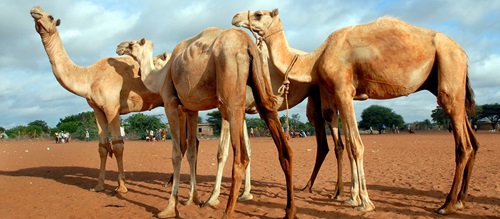
Discussions by correspondence on the proposed standard for pasteurized camel milk get under way
The newly reactivated Codex Committee on Milk and Milk Products (CCMMP) has started its 11th session, with a single agenda item, with the aim of developing a standard for pasteurized liquid camel milk....
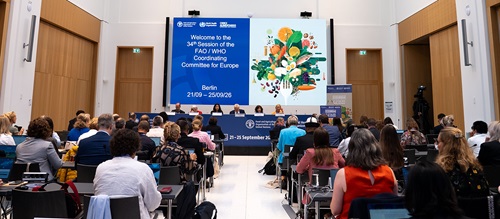
Risk communication, nutrition and food safety shape discussions at CCEURO34
The 34th Session of the FAO/WHO Coordinating Committee for Europe (CCEURO) has concluded in Berlin after a week of intensive discussion on topics relevant to food safety and Codex work in the region. Germany’s...
-jpg.tmb-thb5x4.jpeg?Culture=en&sfvrsn=4d06e677_5)
International standards can help turn the One Health principle into actions
At FAO’s Global Conference for Actions on One Health in Agrifood Systems, which is taking place in Rome, Italy 21–23 September 2026, included a session, Tuesday, on the role of international standards...
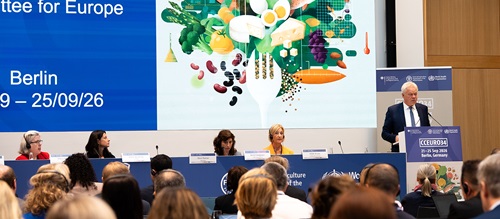
Federal Minister of Agriculture, Food and Regional Identity of Germany opens CCEURO34
The 34th Session of the FAO/WHO Coordinating Committee for Europe (CCEURO34) has opened. Alois Rainer, Federal Minister of Agriculture, Food and Regional Identity of Germany, welcomed the delegates in...
-jpg.tmb-thb5x4.jpeg?Culture=en&sfvrsn=6fd562_5)
57th committee meeting scrutinizes pesticides for residue safety and receives updates on database modernization
The 57th Session of the Codex Committee on Pesticide Residues concluded in Beijing, China. During the one-week session, CCPR considered several compounds evaluated at the 2025 JMPR Meeting and advanced...
-jpg.tmb-thb5x4.jpeg?Culture=en&sfvrsn=12ace103_5)
At 60, a forward-looking pesticides committee continues making progress
The 57th Session of the Codex Committee on Pesticide Residues (CCPR) has opened in Beijing, China, 60 years after its first meeting in the Kingdom of the Netherlands in 1966. DUAN Lifang will preside over the Session for the first time as Chairperson of CCPR.