


57th committee meeting scrutinizes pesticides for residue safety and receives updates on database modernization
-jpg.png?sfvrsn=6fd562_9)
During the one-week session, CCPR considered several compounds evaluated at the 2025 JMPR Meeting and advanced maximum residue limits (MRLs) for adoption as new or revised Codex maximum residue limits (CXLs) at the next Session of the Codex Alimentarius Commission. The Committee also discussed the availability and timely submission of data for some compounds, as well as the retention of related CXLs under the 4-year rule or, where justified by sponsor data commitments, their extension pending the outcome of the JMPR periodic review. Such extensions were granted as a risk-management decision because an additional 4-year cycle cannot be applied. For example, the CXLs for clethodim were retained pending the JMPR periodic review, despite the expiry of the 4-year period, because sponsor support had been identified.
CCPR also agreed to make consequential amendments to the CXLs for “muscle” commodities established before 2025 by appending a note to support their consistent interpretation and implementation by competent authorities. The Committee further agreed to retain the suffix “F” on CXLs for milks for fat-soluble pesticides to clarify that milk fat should be analyzed. This approach will remain in place until JMPR re-evaluates these compounds under the periodic review and establishes revised CXLs for milks and new CXLs for milk fats in line with the CCPR56 decision in 2025 to allocate a note to milk fat CXLs when both milk and milk fat CXLs are established for fat-soluble pesticides, thereby ensuring their consistent interpretation and application.
CCPR further agreed to continue working on applying CXLs for the subgroup of peppers to okra, martynia, and roselle, as the data needed for JMPR to determine whether okra should remain in the subgroup, be moved to another group in the Classification, or be treated separately are not yet available.
In addition, CCPR agreed to consequential amendments to the Classification of foods and animal feeds (CXA 4-1989) and the related Principles and guidance on the selection of representative commodities for the extrapolation of MRLs to commodity groups (CXG 84-2012) by adding commodities such as dried tomato pomace and field seed pennycress, to enable the establishment of single or group CXLs for adoption at the next Session of the Codex Alimentarius Commission.
A separate agenda item addressed unsupported compounds without public health concerns, scheduled for periodic review. Carbaryl, methyl bromide, and flumethrin were removed from this group because they were no longer considered unsupported compounds, as data commitments supporting their periodic review have been identified. Their CXLs and proposed MRLs were retained pending the outcome of the JMPR periodic review, including consideration of a concern form submitted to CCPR for carbaryl. Flumethrin and ethoxyquin remained in the group for further discussion, while other compounds eligible for periodic review, without public health concerns and lacking identified sponsor support, were added for follow-up in accordance with the revised Management of unsupported compounds without public health concerns scheduled for periodic review, which will be published as an information document on the Codex website.
Furthermore, CCPR endorsed the priority list of pesticides for evaluation at the 2027 JMPR Meeting, welcomed an update on the ongoing harmonization of MRLs for compounds used as both veterinary drugs and pesticides, and noted preparations for the virtual joint session of CCPR and the Codex Committee on Residues of Veterinary Drugs (CCRVDF) scheduled for early 2027 to consider single harmonized MRLs for such compounds.
The Codex Secretariat updated CCPR on the project to map all CXLs in the Codex pesticide residues database and align them with the revised crop grouping in the Classification. A related topic was the side event on the new online database on pesticide residues in food and feed, which drew significant attention and offered an opportunity to update Members and Observers on progress in modernizing the database.
Data availability and timely submission remained a key concern and were again highlighted as a major barrier to effective MRL setting.
Read more
Related content
A committee of shared purpose: Sally Hoffer on the evolution of CCCF
Dr Sally Hoffer has chaired the Codex Committee on Contaminants in Food since 2021. CCCF19 will be her last as Chairperson, as she hands over to her successor, Dr Susanne Sutterlin. We spoke with Dr Hoffer...

Interconnectedness is a key factor in inspection and certification work, as Committee meets for 28th Session
The 28th Session of the Codex Committee on Food Import and Export Inspection and Certification Systems (CCFICS) opened in a hybrid format in Perth, Australia, on 12 October, with opening remarks from the...
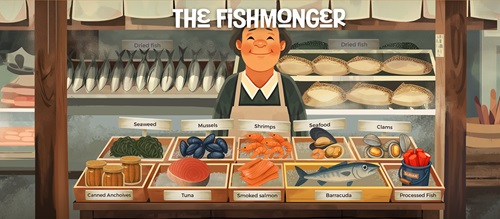
Have you met the Fishmonger?
Codex standards are science-based and developed with input from Codex Members and Observers who bring their experience and expertise to the standard development process. Implementation of Codex standards...

Regional workshop equips countries to generate the science behind Codex pesticide MRLs
How can countries in Asia make sure their most important crops, especially tropical fruits and vegetables, are covered by Codex standards? That question drove a lively and highly interactive Regional Workshop...
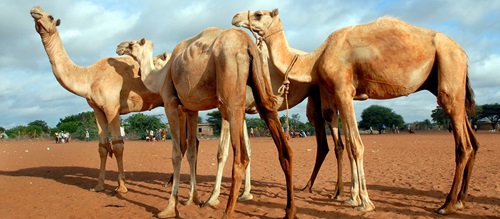
Discussions by correspondence on the proposed standard for pasteurized camel milk get under way
The newly reactivated Codex Committee on Milk and Milk Products (CCMMP) has started its 11th session, with a single agenda item, with the aim of developing a standard for pasteurized liquid camel milk....
Meet the Chairperson of the Codex Committee on Milk and Milk Products
The Codex Committee on Milk and Milk Products (CCMMP) will work by correspondence 29 September–29 October 2026 to discuss the proposed draft standard for pasteurized liquid camel milk. In anticipation...
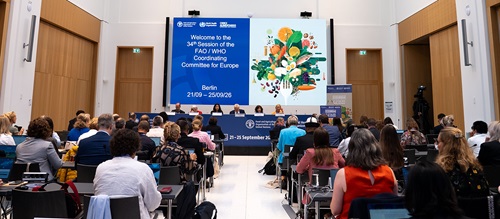
Risk communication, nutrition and food safety shape discussions at CCEURO34
The 34th Session of the FAO/WHO Coordinating Committee for Europe (CCEURO) has concluded in Berlin after a week of intensive discussion on topics relevant to food safety and Codex work in the region. Germany’s...
-jpg.tmb-thb5x4.jpeg?Culture=en&sfvrsn=4d06e677_5)
International standards can help turn the One Health principle into actions
At FAO’s Global Conference for Actions on One Health in Agrifood Systems, which is taking place in Rome, Italy 21–23 September 2026, included a session, Tuesday, on the role of international standards...
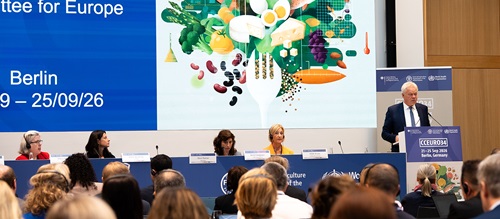
Federal Minister of Agriculture, Food and Regional Identity of Germany opens CCEURO34
The 34th Session of the FAO/WHO Coordinating Committee for Europe (CCEURO34) has opened. Alois Rainer, Federal Minister of Agriculture, Food and Regional Identity of Germany, welcomed the delegates in...