


A committee of shared purpose: Sally Hoffer on the evolution of CCCF
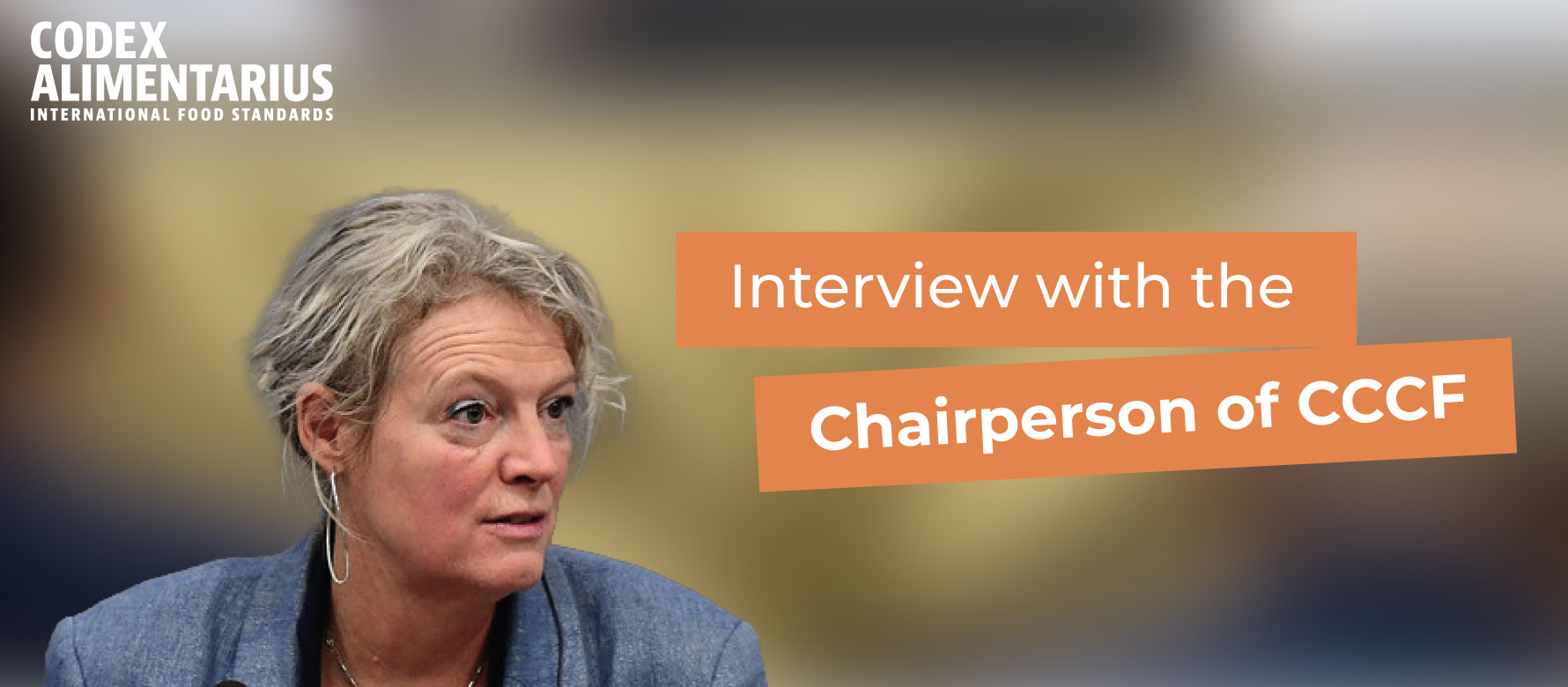
Dr Sally Hoffer has chaired the Codex Committee on Contaminants in Food since 2021. CCCF19 will be her last as Chairperson, as she hands over to her successor, Dr Susanne Sutterlin. We spoke with Dr Hoffer to ask what has been learnt in the last five years, and what the future looks like when it comes to Codex and contaminants in food.
Q.: Sally, your first session chairing CCCF was a baptism of fire: it was among the first Codex committees to meet virtually, during the COVID-19 pandemic. Looking back and comparing that experience with the subsequent physical meetings you have chaired, how would you advise the Commission to manage meeting modalities for EWGs, subsidiary bodies and other meetings, so that we benefit from the advantages of both but minimize the drawbacks.
My first session was certainly a trial! But virtual meetings allowed us to keep working through the pandemic and opened the door to wider participation. But these meetings also exposed challenges, from time-zone inequalities to the loss of informal conversations that are so needed to help build consensus.
My main lesson is that no single format suits every purpose. Virtual meetings work well for focused technical discussions; face-to-face meetings remain invaluable when discussions are complex and relationships matter. Hybrid meetings could offer the best of both worlds. CCCF is now testing this approach, and we will assess the results carefully.
Q.: In anticipation of that first meeting, you described CCCF as a committee that works in "a really constructive spirit, and we achieve results by open discussions and willingness to compromise”.
How would you describe it today if you were asked about the “character” of the Committee?
If I were to describe the "character" of the CCCF today, I would call it a committee of shared purpose, adaptability, and determination. The constructive spirit I encountered in 2021 has not only endured, it has deepened. Contaminants are a global challenge, and our strength lies in recognizing that no single delegation holds all the answers. Instead, we approach our work with a fundamental belief: progress is possible when we listen, learn, and find common ground.
What excites me most is how this Committee has evolved. We don’t just react—we anticipate. We actively scan the horizon for emerging contaminants and we’ve embraced new voices and leadership. For instance welcoming more countries to chair electronic working groups (EWGs) or countries that stepped up to co-host this committee. With this, we’re strengthening participation from all regions, turning collaboration into a habit, not just an aspiration.
And perhaps most importantly, we celebrate what we achieve and acknowledge the unseen efforts by the eWG chairs, the host- and codex-secretariats, JECFA. Step by step, using the energy in the room created by the delegates, we will keep moving forward. That, in essence, is the heart of the CCCF today: a committee that turns challenges into opportunities, differences into dialogue, and shared effort into lasting impact.
Q.: In the five years of your stewardship of this committee, which texts are you most proud to have overseen and what innovations in the committee are you most proud of?
We have made progress on important issues, and I am proud of all of them. From setting “my” first standard with the maximum levels for cadmium in chocolate, to having the committee to develop in lighting speed the new COP for ciguatera poisoning or having in place an information document about data analysis. Yet, what I find most rewarding is how we have reinvented our ways of working to ensure the CCCF remains efficient, inclusive, and future-ready. We’ve introduced structured, multi-year planning to ensure a balanced and manageable workload. We’ve also reviewed existing standards to confirm their relevance in today’s context and we know how to deal with the follow-up to JECFA’s scientific advice.
But perhaps the most rewarding and impactful change has been empowering EWG chairs through year-round virtual preparatory meetings. This shift has streamlined discussions, allowing us to tackle even the most complex issues with greater focus and impact.
Q.: Going to CCCF19, delegates have another busy, yet critical, agenda in front of them.
The groundwork for CCCF19 has been laid with meticulous care, as usual. And my compliments go to our co-host, Egypt, who has planned and secured every detail to pave the road to success. But let’s not forget the host country secretariat, together with the Codex and JECFA secretariats, who have invested significant effort in shaping a clear, targeted agenda. Through electronic working groups (EWGs), virtual consultations, and direct engagement with EWG chairs, we’ve systematically addressed and refined the most sensitive issues. This to ensure that our discussions in the Committee will be targeted and purposeful.
With this strong foundation in place and drawing on the experience gained over many years, I am confident that we will conclude our work on schedule. And that we will again deliver results that stand up to scientific and practical scrutiny that define this Committee. The stage is set for a productive session.
Q.: What is the legacy you leave for Susanne Sutterlin?
I hand this marvellous committee over to Susanne’s leadership, with complete confidence. She brings the commitment and strategic thinking needed to guide CCCF through the challenges ahead. I hope to leave her with a solid foundation to build on: good planning, effective working methods and a broad participation.
My advice to Susanne is simple: prepare early, empower EWG chairs, ensure every delegation feels heard, and draw on the essential scientific and procedural expertise of the host-country secretariat, the Codex Secretariat and the JECFA Secretariat. Their guidance is vital to maintaining scientific rigour, procedural integrity and sound decision-making. And above all, never stop questioning how we can better our work.
Because there is always room to innovate, for instance in how we communicate our work. Our standards and Codes of Practice are valuable tools, yet their impact depends on whether people can access and apply them. More visual guidance, short videos and accessible formats could help bring technical recommendations to life. And also how we engage in discussions where we need to address the impact of climate change and geopolitical developments on food security. Of course guided by a crucial baseline set out by Codex: the vital balance of bringing proportionality and precaution together.
Q.: Anything else you would like to share with the CCCF delegates and broader Codex family?
I hope every CCCF-delegate takes pride in what we have achieved together so far and will achieve in the coming future. For instance by actively communicate our achievements back home, using the dedicated networks and channels to raise awareness and strengthen support for our important work. In particular, I urge the delegates to bring this message to their national leadership and CAC representatives, so they can champion CCCF’s work at the general Commission level and ensure that our collective efforts receive the recognition and support they deserve.
Chairing CCCF for 6 years has been a privilege. I thank you all and I leave with gratitude and the conviction that CCCF’s most important work lies within each and one of you.
Read more
Related content
Interconnectedness is a key factor in inspection and certification work, as Committee meets for 28th Session
The 28th Session of the Codex Committee on Food Import and Export Inspection and Certification Systems (CCFICS) opened in a hybrid format in Perth, Australia, on 12 October, with opening remarks from the...
Have you met the Fishmonger?
Codex standards are science-based and developed with input from Codex Members and Observers who bring their experience and expertise to the standard development process. Implementation of Codex standards...
Discussions by correspondence on the proposed standard for pasteurized camel milk get under way
The newly reactivated Codex Committee on Milk and Milk Products (CCMMP) has started its 11th session, with a single agenda item, with the aim of developing a standard for pasteurized liquid camel milk....
Meet the Chairperson of the Codex Committee on Milk and Milk Products
The Codex Committee on Milk and Milk Products (CCMMP) will work by correspondence 29 September–29 October 2026 to discuss the proposed draft standard for pasteurized liquid camel milk. In anticipation...
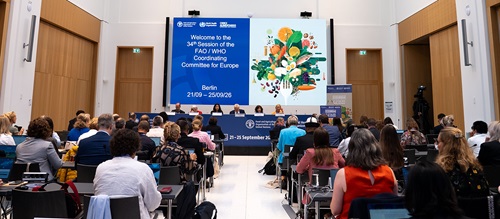
Risk communication, nutrition and food safety shape discussions at CCEURO34
The 34th Session of the FAO/WHO Coordinating Committee for Europe (CCEURO) has concluded in Berlin after a week of intensive discussion on topics relevant to food safety and Codex work in the region. Germany’s...
-jpg.tmb-thb5x4.jpeg?Culture=en&sfvrsn=4d06e677_5)
International standards can help turn the One Health principle into actions
At FAO’s Global Conference for Actions on One Health in Agrifood Systems, which is taking place in Rome, Italy 21–23 September 2026, included a session, Tuesday, on the role of international standards...
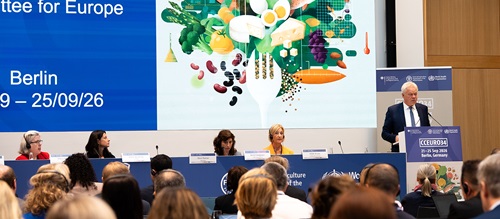
Federal Minister of Agriculture, Food and Regional Identity of Germany opens CCEURO34
The 34th Session of the FAO/WHO Coordinating Committee for Europe (CCEURO34) has opened. Alois Rainer, Federal Minister of Agriculture, Food and Regional Identity of Germany, welcomed the delegates in...
-jpg.tmb-thb5x4.jpeg?Culture=en&sfvrsn=6fd562_5)
57th committee meeting scrutinizes pesticides for residue safety and receives updates on database modernization
The 57th Session of the Codex Committee on Pesticide Residues concluded in Beijing, China. During the one-week session, CCPR considered several compounds evaluated at the 2025 JMPR Meeting and advanced...
-jpg.tmb-thb5x4.jpeg?Culture=en&sfvrsn=12ace103_5)
At 60, a forward-looking pesticides committee continues making progress
The 57th Session of the Codex Committee on Pesticide Residues (CCPR) has opened in Beijing, China, 60 years after its first meeting in the Kingdom of the Netherlands in 1966. DUAN Lifang will preside over the Session for the first time as Chairperson of CCPR.