


Updated JECFA Toolbox for veterinary Drug Residue Risk Assessment
The Food and Agriculture Organization of the United Nations (FAO) has released an updated JECFA Toolbox for Veterinary Drug Residues Risk Assessment, an interactive online resource that explains the scientific process used by the Joint FAO/WHO Expert Committee on Food Additives (JECFA) to assess the safety of veterinary drug residues in food.
The revised version includes targeted updates to improve the scientific accuracy, clarity, consistency, and usability of the Toolbox and related website content, ensuring that the resource remains up to date and accessible for users.
Veterinary drugs are essential for animal health and food production. However, their use can leave residues in animal-derived food products such as meat, milk, eggs, and honey. Scientific risk assessment helps ensure that these residues do not pose a health risk to consumers, while supporting the development of internationally recognized standards that facilitate safe and fair trade.
The toolbox is organized into interactive online sections that guide users through each step of the risk assessment process and provide access to supporting technical materials.
The JECFA risk assessment process evaluates the potential health effects and dietary exposure associated with veterinary drug residues using available scientific data. This scientific advice supports evidence-based decision-making, helps protect public health, and informs the establishment of maximum residue limits (MRLs). JECFA’s recommended MRLs are subsequently considered by the Codex Committee on Residues of Veterinary Drugs in Food (CCRDVF), which develops the corresponding risk management measures.
The Toolbox is intended for national and local competent authorities responsible for veterinary drug approval, the pharmaceutical industry, livestock producers, or veterinary associations.
The JECFA Toolbox was developed with support from the Codex office of the United States of America.
Read more
Related content
A committee of shared purpose: Sally Hoffer on the evolution of CCCF
Dr Sally Hoffer has chaired the Codex Committee on Contaminants in Food since 2021. CCCF19 will be her last as Chairperson, as she hands over to her successor, Dr Susanne Sutterlin. We spoke with Dr Hoffer...
Interconnectedness is a key factor in inspection and certification work, as Committee meets for 28th Session
The 28th Session of the Codex Committee on Food Import and Export Inspection and Certification Systems (CCFICS) opened in a hybrid format in Perth, Australia, on 12 October, with opening remarks from the...
Have you met the Fishmonger?
Codex standards are science-based and developed with input from Codex Members and Observers who bring their experience and expertise to the standard development process. Implementation of Codex standards...
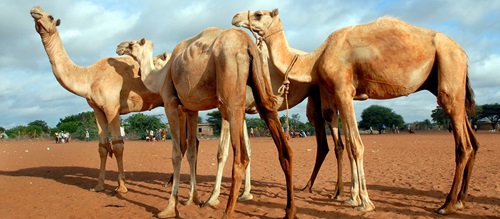
Discussions by correspondence on the proposed standard for pasteurized camel milk get under way
The newly reactivated Codex Committee on Milk and Milk Products (CCMMP) has started its 11th session, with a single agenda item, with the aim of developing a standard for pasteurized liquid camel milk....
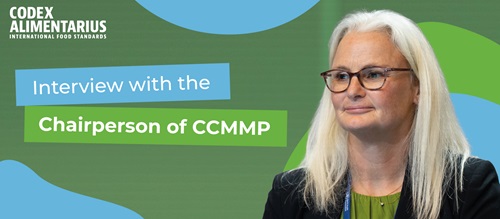
Meet the Chairperson of the Codex Committee on Milk and Milk Products
The Codex Committee on Milk and Milk Products (CCMMP) will work by correspondence 29 September–29 October 2026 to discuss the proposed draft standard for pasteurized liquid camel milk. In anticipation...
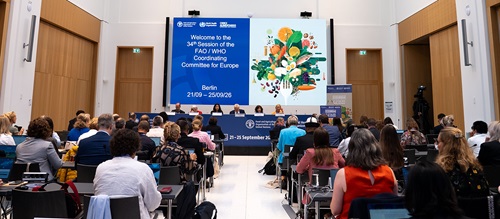
Risk communication, nutrition and food safety shape discussions at CCEURO34
The 34th Session of the FAO/WHO Coordinating Committee for Europe (CCEURO) has concluded in Berlin after a week of intensive discussion on topics relevant to food safety and Codex work in the region. Germany’s...
-jpg.tmb-thb5x4.jpeg?Culture=en&sfvrsn=4d06e677_5)
International standards can help turn the One Health principle into actions
At FAO’s Global Conference for Actions on One Health in Agrifood Systems, which is taking place in Rome, Italy 21–23 September 2026, included a session, Tuesday, on the role of international standards...
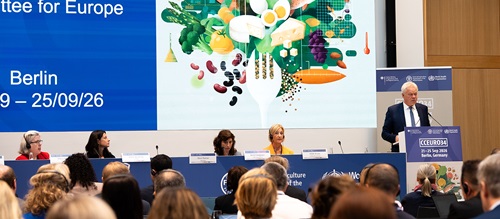
Federal Minister of Agriculture, Food and Regional Identity of Germany opens CCEURO34
The 34th Session of the FAO/WHO Coordinating Committee for Europe (CCEURO34) has opened. Alois Rainer, Federal Minister of Agriculture, Food and Regional Identity of Germany, welcomed the delegates in...
-jpg.tmb-thb5x4.jpeg?Culture=en&sfvrsn=6fd562_5)
57th committee meeting scrutinizes pesticides for residue safety and receives updates on database modernization
The 57th Session of the Codex Committee on Pesticide Residues concluded in Beijing, China. During the one-week session, CCPR considered several compounds evaluated at the 2025 JMPR Meeting and advanced...