


Codex strategic plan takes centre stage at the 2026 Shenzhen Food Safety Forum
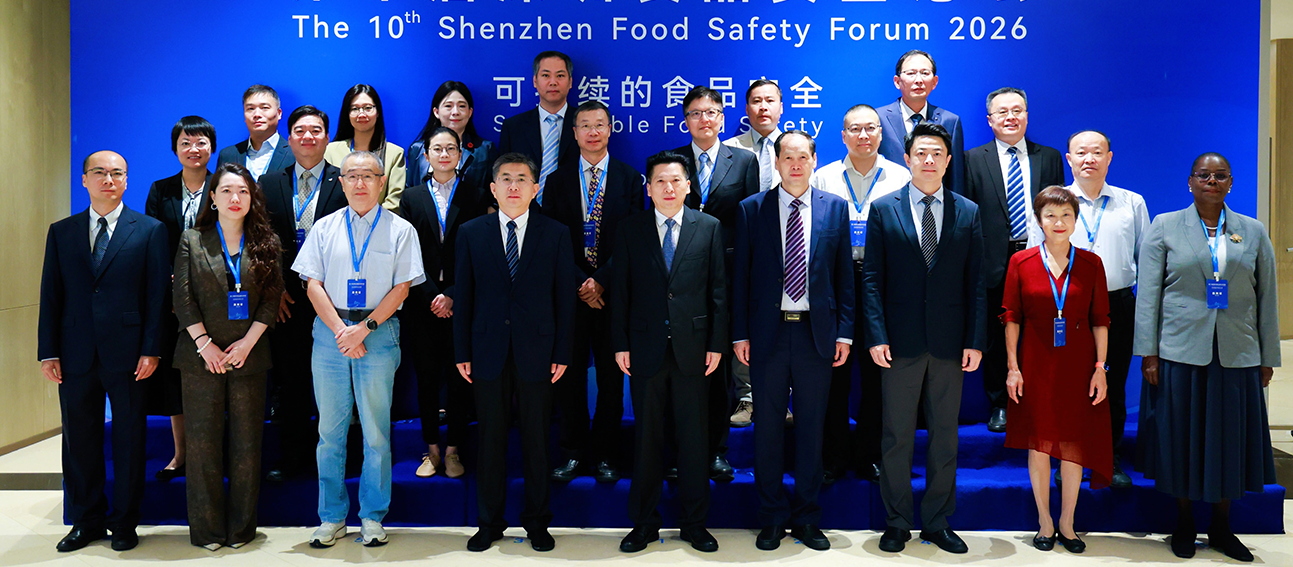
The 2026 Shenzhen Food Safety Forum took place in Shenzhen (China) on 15 September 2026 under the theme of “Sustainable Food Safety”, in response to the Codex Alimentarius Commission strategic plan 2026–2031 and its call for a transition towards more sustainable and resilient food systems. As the host, Mr Liu Guangyang, Director-General of the Shenzhen Municipal Administration for Market Regulation, welcomed all participants and emphasized the importance of risk communication in advancing a society-wide collaborative approach to food safety governance. Deputy Director-General, Mr Li Ying delivered a thematic presentation titled “Practices and Achievements of Shenzhen in Strengthening Whole-Chain Food Safety Regulation”, systematically introducing Shenzhen's exploration and achievements in advancing food safety governance through a whole food chain approach. Keynote speeches and presentations were delivered by several distinguished speakers including political leaders from the national, regional and municipal levels, the Codex Alimentarius Commission (CAC), FAO, food safety risk analysis experts, academia including research centres and the private sector.
Mr Li Jiajian of the Ministry of Agriculture and Rural Affairs noted that the Chinese government attaches great importance to agricultural food production and he indicated that food safety was the premise of food quality. Mr Sun Feng, Guangdong Administration indicated that food safety was the foundation of people’s livelihoods, the cornerstone of security and the key to development. Mr Chan Yaodong, Deputy Secretary-General, Shenzhen Municipal People’s Government, stated that food is a vital necessity for all people. Thus, ensuring food safety is of paramount importance for Shenzhen, where more than 90 percent of the food consumed is sourced externally. He stressed the importance of preventing food safety risks and of ensuring long-term food safety governance and resilience.
Codex Vice-Chairperson Tian Jing congratulated the Shenzhen Food Safety Forum on successfully reaching the key milestone of its 10th anniversary and she highlighted the fact that, over the years, the Shenzhen Food Safety Forum had established itself as a recognised international platform, which fosters food safety cooperation and facilitates the exchange of knowledge, best practices and innovative technologies among food safety stakeholders. She also noted that, in the past, the Shenzhen Institute for Standards and Technology had shared China’s food safety governance, experiences and solutions at three sessions of the CAC. Ms Tian Jing highlighted the importance of Codex, where the world comes together to develop food safety and quality standards to protect everyone everywhere, based on the Codex dual objectives, the Codex risk analysis principles and in line with the Codex core values of inclusiveness, collaboration, consensus building and transparency.
Dr Junshi Chen, former Chairperson of the Codex Committee on Food Additives indicated that sustainable food safety was built on the integration of scientific risk assessment and standardised risk management, which constitute the foundation of modern food safety governance. Noting emerging food safety challenges and continuous innovation in food technologies, Dr. Chen underscored the importance of prioritising core health risks, strengthening the entire food value chain, collaborative governance and updating regulatory frameworks to effectively safeguard public health while accommodating food technological innovation.
Awilo Ochieng Pernet, former Chairperson of the CAC, highlighted the importance of effectively implementing national food standards based on Codex guidance in order to ensure global food safety. Guibiao Ye, FAO Plant Production and Protection Division presented the One Health approach for food safety. In her keynote entitled “Trust from farm to table: Building sustainable partnerships for quality and safety of agricultural products”, Lu Xindan, Ministry of Agriculture and Rural Affairs, highlighted that agricultural products should comply with all relevant food safety and quality standards in order to access food markets. Stressing the fact that it was very crucial to stay ahead of emerging risks in order to ensure safe food for all, Ng Wan Ling, Singapore National Centre for Science highlighted the five potential areas, which influence inorganic food safety risks: New food sources and production systems; consumer consumption pattern shift, which results in the change in exposure to various contaminants; climate change; geopolitical tensions and green energy transitions. During the Forum, a commemorative documentary titled "A Decade Together, Connecting the World" was also released, offering a comprehensive review of the Forum's decade-long efforts, from 2016 to 2026, in connecting global resources and deepening China-international exchanges in the food safety sector, while showcasing the parallel progress of Shenzhen's food safety governance alongside the Forum's development. Over its decade-long journey, the Shenzhen Food Safety Forum has brought together experts from 19 countries from various regions, 22 international organizations, 18 academicians from China and abroad and over 200 industry representatives, engaging more than 6.9 million participants online and on-site.
Overall, the 2026 Shenzhen Food Safety Forum demonstrated that Codex standards and guidance play an essential role in ensuring sustainable food safety and that all stakeholders in the food value chain should look beyond today’s food safety hazards in order to ensure food safety, food security and nutrition in future.
Related content
Regional workshop equips countries to generate the science behind Codex pesticide MRLs
How can countries in Asia make sure their most important crops, especially tropical fruits and vegetables, are covered by Codex standards? That question drove a lively and highly interactive Regional Workshop...
Codex coordinators prepare for new regional meeting cycle, stress stronger coordination and capacity building
The Codex coordinators met with representatives of the Codex Secretariat, FAO and WHO, to prepare for a new cycle of FAO/WHO coordinating committee meetings, with six regional sessions scheduled between...
.tmb-thb5x4.jpeg?Culture=en&sfvrsn=33d295f8_1)
The 6th Global Conference on Foodborne AMR successfully held in Seoul, highlighting the achievements of the ACT Project
The 6th Global Conference on Foodborne Antimicrobial Resistance (GCFA) was successfully held on 13 May 2026 in Seoul, Republic of Korea. The conference has become an important international platform for...
ACT project to share experiences at the 6th Global Conference on Foodborne AMR
The FAO-implemented Action to support implementation of Codex AMR texts (ACT) project will share its experiences and challenges at the 6th Global Conference on Foodborne Antimicrobial Resistance (GCFA),...
.tmb-thb5x4.jpeg?Culture=en&sfvrsn=de5f6081_1)
ACT / Pakistan strengthens One Health response to foodborne antimicrobial resistance at national conference
Pakistan is stepping up efforts to address foodborne antimicrobial resistance (AMR), one of the most pressing threats to public health, food safety and sustainable agriculture, through a strengthened One...
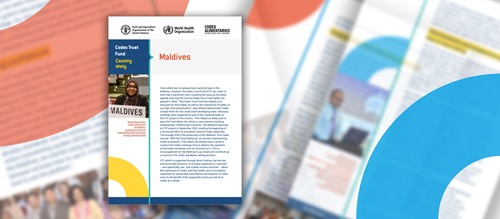
CTF / New success story from the Maldives shows a strengthened national food safety system
A new Success Story published by WHO and FAO demonstrates how support from the Codex Trust Fund (CTF) has helped the Maldives strengthen its national food safety system and improve its effective participation...
-jpg.tmb-thb5x4.jpeg?Culture=en&sfvrsn=73645107_1)
ACT / Cambodia Strengthens Capacity on Costing and Budgeting for its Multi Sectoral Action Plan on AMR
Siem Reap, Cambodia – 25 February 2025 The Food and Agriculture Organization of the United Nations (FAO), through the Action to support implementation of Codex AMR texts (ACT) project funded by the Ministry...
-(cropped).tmb-thb5x4.jpeg?Culture=en&sfvrsn=7dba5d40_1)
ACT / Cambodia strengthens feed inspection capacity to combat antimicrobial resistance
Cambodia is stepping up efforts to curb antimicrobial resistance (AMR) in livestock production by improving the skills of its feed inspectors. From 3–5 December 2025, the Food and Agriculture Organization...

CAC48 / Coming soon: a new standard for Codex, thanks in part to the Codex Trust Fund
The Codex Trust Fund (CTF) is facing challenges that may mean it will have to be restructured, changed, re-thought. But this should not detract from the incredible impacts that it has been and still is...